Table of Contents
Introduction: Where Emotion Meets Automation
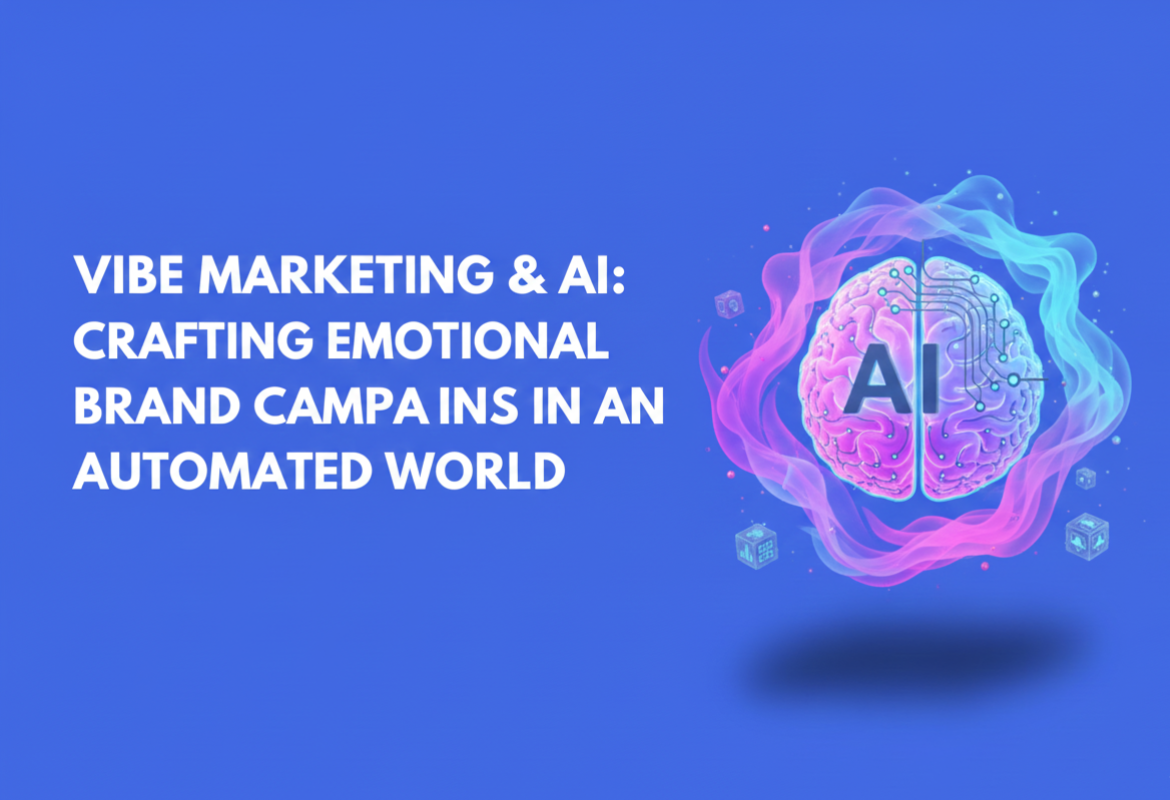
Marketing has always been about connection. But in today’s AI-driven environment where algorithms decide what content gets seen, when, and by whom brands face a new challenge: how to retain emotional depth while scaling through automation.
This is where Vibe Marketing comes in. It’s not about surface-level aesthetics or chasing trends. It’s about creating campaigns that feel human, emotional, and resonant while using AI systems to amplify, target, and adapt them at scale.
In this guide, we’ll unpack:
- What Vibe Marketing means in 2025.
- How AI is shaping the emotional layer of brand storytelling.
- Step-by-step frameworks for designing campaigns that cut through noise without losing their soul.
- Practical examples from UK markets, from PPC to TikTok.
- Measurement strategies to track both automation efficiency and emotional impact.
The bottom line: the future belongs to brands that balance AI-driven precision with human-driven emotional resonance.
Part 1: What is Vibe Marketing in the Age of AI?
From Messaging to Feeling
Marketing has evolved in three distinct stages:
- Traditional marketing = product + benefits.
- Digital marketing = targeted reach + measurable outcomes.
- Vibe Marketing = emotional resonance, storytelling, and community-driven identity.
In a world of automated ads, predictive analytics, and AI content, vibe becomes the differentiator. Consumers may scroll past yet another polished PPC ad, but they remember how a campaign made them feel.
Real-world examples of vibe-led branding
- Nike’s “You Can’t Stop Us” campaign (2020 pandemic): The vibe wasn’t about trainers. It was about resilience + unity. The emotional delivery made it memorable worldwide.
- Monzo Bank (UK): Their tone of voice feels conversational, approachable, and human. That vibe transparency + friendliness differentiates them in a saturated fintech space.
Neither of these vibes were created by AI. But increasingly, AI is used to amplify, personalise, and scale the emotional narratives behind campaigns.
Part 2: The Role of AI in Emotional Branding
AI is usually seen as rational: automated bidding, predictive workflows, performance dashboards. But when paired with human creativity, AI becomes an amplifier of emotional connection.
Three ways AI powers emotional campaigns
1. AI Audience Listening
- How it works: AI sentiment analysis scans conversations, reviews, and social posts to uncover not just what people say but how they feel.
- Tools: Brandwatch, Talkwalker, Pulsar, and even AI-driven call transcript analysis.
- UK example: A hospitality group in London uses AI listening to detect that customers aren’t just frustrated with price hikes, they’re nostalgic for “the old pub feel.” This insight shifts messaging from “value deals” to “bringing back authentic pub nights.”
2. AI-Powered Creative Testing
- How it works: Instead of guessing which visuals or copy land best, brands can run hundreds of micro-tests. AI identifies which emotional triggers (hope, humour, urgency, pride) resonate.
- Example: A fashion retailer in Manchester tests two TikTok creatives: one styled “aspirational runway” vs. another styled “authentic flat-share mirror selfie.” AI analysis shows authentic wins locally even if aspirational works better in London.
3. AI-Generated Personalisation
- How it works: AI tailors content tone and timing based on mood and behaviour.
- Example: Spotify’s AI-curated playlists don’t just recommend songs they recommend moods. Similarly, ecommerce brands now adjust email tones: luxury reassurance for high-spend users vs. playful excitement for bargain hunters.
AI doesn’t replace the vibe. It detects, scales, and adapts it.
Part 3: Why Emotion Still Beats Automation
Even in 2025, no algorithm outperforms human creativity when it comes to resonance.
- Trust is emotional. A bank can automate its ads, but trust comes from tone, empathy, and reassurance.
- Memory is emotional. Neuroscience shows people retain feelings more strongly than facts.
- Choice is emotional. In B2B, decision-makers may justify ROI, but the deciding factor is often: “Do I feel safe and confident choosing this vendor?”
This is why Vibe Marketing is not about replacing creativity with AI. It’s about ensuring automation doesn’t strip away the human spark.
Part 4: Framework for Crafting AI-Driven Vibe Campaigns
Here’s a five-step playbook for blending AI efficiency with emotional resonance.
Step 1: Define the Emotional Core
Ask: What do we want people to feel after engaging with this campaign?
Examples: hope, pride, nostalgia, ambition, playfulness, relief.
Step 2: Map Emotional Triggers to Customer Journeys
- Awareness stage: intrigue + curiosity.
- Consideration stage: trust + credibility.
- Decision stage: urgency + reassurance.
Step 3: Use AI for Emotional Insights
- Social listening to detect trending moods.
- Predictive models to anticipate what emotions resonate by region.
- Example: An energy provider uses AI to learn that “eco-pride” resonates in Brighton, but “cost relief” matters more in Birmingham.
Step 4: Blend Automation + Human Creative
- AI generates ad variations.
- Humans refine and ensure tone stays “on-vibe.”
- Example: A UK ecommerce brand uses Google PMax ads to scale reach, but every ad still starts with a human-written vibe story.
Step 5: Test, Learn, Refine
- Run micro-campaigns to validate vibes.
- Optimise with AI, but let humans decide which story feels authentic.
Part 5: Practical Examples of Vibe + AI in Action
PPC Campaigns
Most PPC ads are rational price, features, ROI. Vibe PPC means adding emotional layers.
- Example: A PPC audit service in London reframes copy from “We save you wasted ad spend” to “We give you peace of mind every pound is working.”
SEO + Content Strategy
AI optimises keywords. Vibe SEO makes content feel engaging.
- Example: Instead of “Shopify SEO tips,” publish “How to make your online store feel trusted in Google’s eyes.”
Email Marketing
Emotion in email marketing = personal connection.
- Example: A bulk email marketing service reframes from “send more emails” to “make every customer feel remembered.”
CRO + Landing Pages
Conversion isn’t just clicks. It’s about emotional confidence.
- Example: Instead of “Proceed to payment,” a CRO agency redesigns checkout with: “You’re nearly there your order’s waiting for you.”
Social Media Advertising
- TikTok and Instagram are vibe-first platforms.
- Example: A social media marketing agency in Manchester runs TikTok ads tapping into humour and community pride rather than generic product pitches.
AI Advertising Tools
- Automated platforms (Meta Advantage+, Google AI Ads) can generate creatives but only if you train them on your vibe.
Example: Feeding AI your brand’s voice guide so auto-generated ads sound human, not robotic.
Part 6: UK Market Insights Emotion at a Local Level
The UK audience is sceptical of “over-polished corporate” ads. They prefer authenticity, humour, and relatability.
Regional vibe differences
- London: aspiration + status.
- Manchester: humour + community.
- Edinburgh: heritage + trust.
- Liverpool: pride + solidarity.
- Bristol: creativity + activism.
Sector-based vibe differences
- Finance: trust, reassurance, stability.
- Retail: aspiration, convenience, excitement.
- Tech: curiosity, innovation, belonging.
- Healthcare: empathy, safety, care.
Ignoring these nuances means campaigns might technically perform but feel “off-vibe.”
Part 7: Measurement Tracking the Emotional ROI
Automation loves numbers. Emotion is harder to track but not impossible.
Core metrics for vibe campaigns
- Sentiment analysis: AI tools can measure tone in comments, reviews, and reactions.
- Brand recall studies: Quick surveys asking “Which campaign made you feel inspired this week?”
- Engagement quality: Comments, shares, save rates not just clicks.
- Micro-conversions: Email signups, video completions, time on site emotional signals before purchase.
Sales correlation: Track whether vibe-heavy campaigns produce stickier customers (repeat purchases, higher CLV).
Part 8: Challenges & Pitfalls
- Over-automation: Letting AI run unchecked makes campaigns robotic.
- Emotional mismatch: Pushing urgency where trust is needed.
- Short-term optimisation: Chasing CTR at the cost of long-term brand equity.
- Data without context: AI can detect moods, but only humans can interpret what they mean in culture.
Conclusion: The Future Belongs to Brands That Feel
AI will keep evolving, automating, and scaling. But the brands that win will be the ones that never lose the human layer.
Vibe Marketing isn’t fluff. It’s the glue that turns performance campaigns into memorable experiences.
The formula for 2025 and beyond is simple:
- Use AI for scale.
- Use humans for soul.
That’s how you build campaigns that don’t just convert clicks they build emotional loyalty that lasts.