Table of Contents
Introduction: when marketing is measured by mood
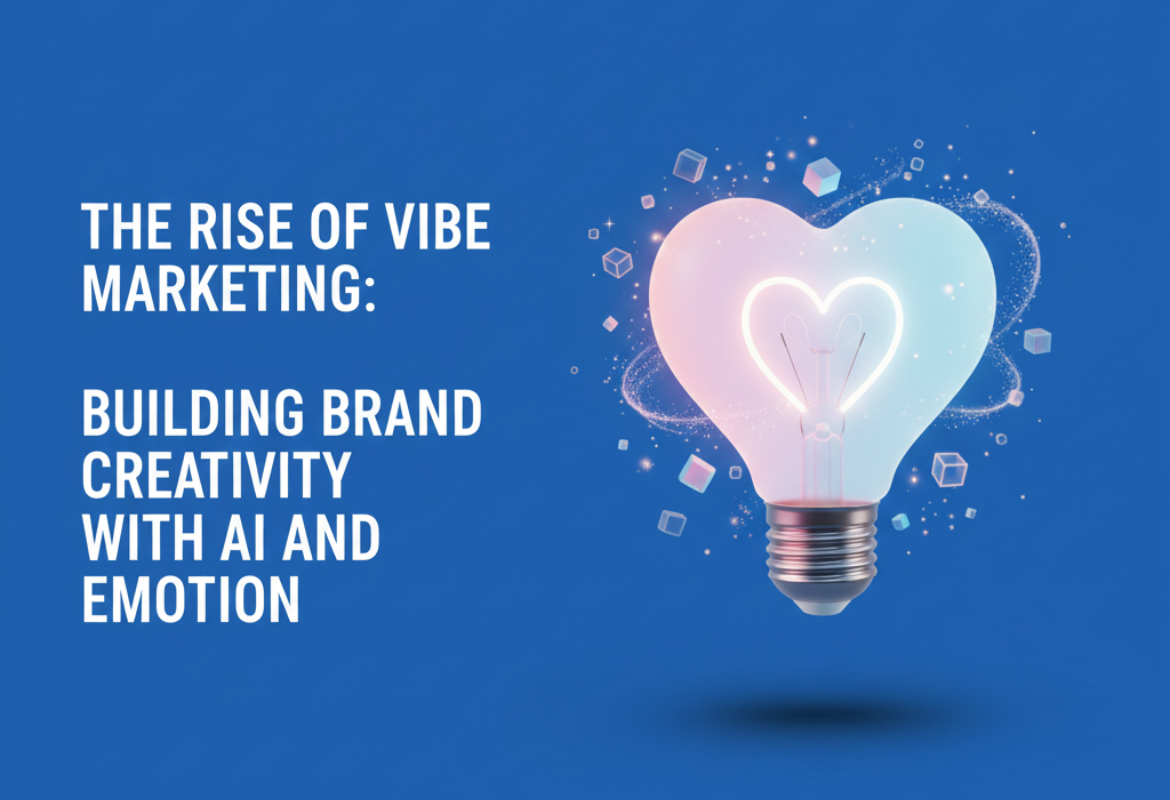
Marketing stopped being purely transactional years ago. What has changed recently is that brands can now measure and optimise the emotional reactions their creative provokes. That shift matters because people do not buy only for features; they respond to context, culture, and a feeling that says “this brand gets me.” Vibe marketing is the practice of designing that feeling deliberately across channels and using data, experimentation, and automation to determine which moods produce measurable commercial results.
This long-form guide lays out a pragmatic, work-ready approach to vibe marketing. You’ll find definitions, practical frameworks, channel-level tactics (PPC, SEO, email, programmatic, social), measurement plans, UK-specific considerations, and step-by-step templates you can use in agency or in-house settings. I will explain what each strategy is, how it works, why it matters for performance, and exactly how to apply it.
Read this as a marketing leader or practitioner’s manual: not theory dressed as insight, but end-to-end guidance you can run this quarter.
What is vibe marketing a precise definition
The definition
Vibe marketing is an approach that starts with an emotional proposition, a cultural mood or tonal identity and aligns creative, messaging, experience design, and targeting to deliver that mood consistently across paid, owned, and earned channels. It treats emotion as a variable you can test, measure, and optimise the same way you would a bid strategy or landing page funnel.
Three components of a vibe
- Emotional proposition: the one-line feeling you want people to leave with (e.g., calm certainty, playful defiance, practical optimism).
- Creative levers: visual design, copy tone, music or sound design, pacing and cadence in video, and microcopy on-site.
- Channel execution: how the mood is translated into search snippets, display banners, short-form video, email subject lines, or checkout microcopy.
How vibe marketing differs from traditional branding
Traditional branding often defines identity at a high level and hopes consistent advertising will create affinity over time. Vibe marketing layers measurability onto identity: you test variants of emotional tone, correlate them to conversion metrics, and scale the ones that consistently move KPIs. This moves emotion from a qualitative brand input to a quantitative performance lever.
Why emotion matters for performance
The behavioural basis
Behavioural psychology and neuromarketing research converge on the same insight: emotion drives attention and memory, which are necessary precursors to conversion. Positive affect increases recall. Distinctive emotional signals cut through ad clutter. Emotional consistency reduces cognitive friction when a user moves from ad to landing page.
Practical implications for campaigns
- Higher CTRs on emotionally resonant headlines: copy that signals relevance or identity outperforms neutral claims.
- Better landing page engagement: when an ad’s tone and landing page tone match, bounce rates fall and time-on-page rises.
- Stronger shareability and organic reach: content that reliably triggers emotion (nostalgia, pride, amusement) earns more organic backlinks and social shares.
Evidence you can test quickly
Run two parallel search ad sets for the same keyword: one with purely benefit-led copy (“Top-rated PPC agency, lower CAC”) and one with emotional tone (“Ads that don’t feel like ads real results”). Compare CTR and conversion rate. Repeat with landing pages that match each tone. That simple experiment demonstrates the causal link between emotional fit and performance.
How AI and emotion analytics make vibe marketing operational
The mechanics what the stack looks like
A practical vibe-marketing stack has three layers:
- Creative generation layer: tools (human-guided) that create multiple visual and copy variants based on briefed moods.
- Sentiment and behavioural layer: social listening, comments analysis, short surveys, and in-ad sentiment testing to capture emotional response.
- Performance correlation layer: platforms and analytics that map creative variants to conversion metrics and revenue outcomes.
These layers are integrated via experiment orchestration: creatives are deployed in A/B or multivariate tests, sentiment is measured in parallel, and statistical models connect emotional signals to ROI.
Step-by-step data flow
- Create 3 mood-led creative clusters (e.g., “reassuring & calm”, “playful & bold”, “direct & tactical”).
- Generate 6–10 creative variants per cluster for channels you’ll test (search ad headlines, display banners, 15s video cuts, email subject lines, landing page variants).
- Deploy microtests across channels with controlled budgets (small enough to be affordable, large enough to reach statistical power).
- Collect both behavioural metrics (CTR, CVR, bounce rate, session duration, revenue per visit) and emotion signals (comment sentiment, short post-click survey responses, facial or voice analysis where ethical and compliant).
- Use statistical tools to estimate the lift attributable to mood clusters; scale the winners.
Tools and practical notes
- Creative production: use design systems, modular templates, and a small roster of creative prompts to speed iteration while keeping a consistent mood.
- Sentiment analysis: use social listening platforms and in-ad sentiment tagging. Keep human review in the loop to validate automated classifications.
- Attribution & analytics: connect ad creative IDs to landing page IDs via UTM parameters and CRM events so every creative variant can be tied to revenue.
UK note: include ASA (Advertising Standards Authority) compliance checks for claims and ensure local language/dialect variants do not contradict regulations. For regulated industries, involve legal early when emotion intersects with claims.
A 30-day sprint to test and scale a vibe
Why a sprint works
A tight 30-day sprint forces prioritisation and creates momentum. It separates discovery and production from testing and scaling, while leaving room for iteration. Below is an operational sprint you can run in an agency or in-house.
Stage 1: Cultural discovery (Days 1–5)
What to do
- Run social listening across target audiences and relevant hashtags for the past 90 days to identify recurring emotional threads.
- Interview 6–8 customers or prospects for qualitative context about how they describe the product or category in real language.
- Build 2–3 moodboards that capture visual, verbal, and sonic cues.
Deliverables
- A 1-page mood brief per vibe (emotion, sample words, tone-of-voice dos/don’ts, colour palette suggestions).
- A prioritized test hypothesis list (e.g., “Calm reassurance will produce higher sign-ups among mid-market ecommerce founders than playful tone”).
Stage 2: Creative specification (Days 5–10)
What to do
- Prepare creative templates: three headline formulas, three video hooks, three email subject patterns, three landing page hero treatments.
- Map creative variant IDs to campaign structure and tracking plan.
Deliverables
- Creative brief folder (copy + design + production notes) ready for execution.
- Tracking plan document with required UTM schema and conversion events.
Stage 3: Production (Days 10–18)
What to do
- Produce low-fi and hi-fi variants: static display, 6–15s video cuts, search ad copy, two landing page templates.
- Run quick QA across browsers and devices; ensure consistency in tone across creative assets.
Deliverables
- Asset library and deployment packages for each channel.
- Pre-test checklist: accessibility, ASA compliance, tracking verification.
Stage 4: Micro-testing (Days 18–24)
What to do
- Launch micro-campaigns on Google Search, Performance Max or Display, and one social channel (TikTok or Meta).
- Use small, controlled daily budgets to get early signal without overspending.
- Capture both sentiment and performance signals.
Metrics to monitor
- CTR, CVR, CPA, ROAS, time on page, bounce rate, survey-based emotional lift.
Deliverables
- An initial results dashboard with creative-level performance sorted by mood cluster.
Stage 5: Optimise and scale (Days 24–30)
What to do
- Select top 1–2 mood clusters and expand budgets and placements.
- Run conversion rate optimisation experiments on landing pages for winning creative: headline tests, CTA copy, imagery.
- Tighten audience segments based on where the vibe performed best.
Deliverables
- Scale plan with projected incremental revenue, budget allocation, and optimisation roadmap for next 60 days.
Channel playbooks practical scripts and examples
Google Paid Search (Search & Performance Max)
Principles
Search ads are a moment of intent; mood must enhance clarity without obscuring relevance. Use emotional cueing in headlines and descriptions that preserve keyword relevance.
Tactics
- Headline pairing: Pair a primary keyword headline (e.g., “Shopify SEO Services”) with a secondary headline that signals mood (“Calm guidance for busy founders”).
- Ad extensions: Use callouts and structured snippets to reinforce emotional claims (e.g., “No jargon support”, “Straightforward results”).
- Landing page match: Ensure that the ad’s mood is mirrored by the hero section on landing pages same tone, similar imagery.
Example
Keyword: “ecommerce SEO agency”
Ad A (utility): “ecommerce SEO agency technical audits & link building”
Ad B (mood + utility): “ecommerce SEO agency | Practical SEO for faster growth” B should be tested against A for CTR and CVR.
Performance Max notes
Use asset groups to map emotional clusters. Supply multiple copy and visual assets labelled by mood so the platform can learn which combinations perform for which audiences and placements. Monitor creative-level performance and exclude combinations that produce poor conversion rates.
SEO & content
Principles
SEO content must serve two purposes: satisfy search intent and deliver a consistent emotional experience that builds trust and engagement metrics (dwell time, pages per session).
Tactics
- Topical scaffolding: Choose pillar pages that combine practical advice with a tone that matches your brand mood.
- Formatting: Use case studies, first-person quotes, and micro-stories to create emotional resonance inside long-form content.
- Backlink-friendly assets: Produce culturally relevant pieces (local guides, trend roundups) that people want to share because they feel timely and authentic.
UK-specific example
A London-based digital agency could publish “Local SEO for London Marketplaces: A Practical Guide” that uses a polished, professional tone with local examples (markets, boroughs) to resonate with London SMEs.
Email marketing
Principles
Inbox competition is high. A clear emotional hook in the subject line that matches the landing page improves both open rates and downstream conversions.
Tactics
- Subject line patterns: Identity-first (“For founders who…”), curiosity-first (“One simple edit that stopped cart abandonment”), utility-first (“How we cut CAC by 23%”). Test these against each other.
- Segmentation: Serve mood-matched sequences to audience segments. New leads may receive a reassuring, explanatory tone; existing customers may prefer playful, inside-baseball content.
- Personalisation: Use behaviour data (product viewed, pages visited) to pick the mood variant a returning visitor sees a more direct, confident tone.
Example
Segment: Shopify store owners who abandoned at checkout.
Email A (reassuring): Subject: “A quick fix for checkout friction”; body: brief steps and testimonial.
Email B (urgent playful): Subject: “Cart left behind quick win inside” test both for recovery rate
Paid social (TikTok, Meta, LinkedIn)
Principles
Social requires authenticity tuned to platform norms. TikTok and Instagram favour unvarnished moments; LinkedIn expects authority with subtle human tone.
Tactics
- Native-first creative: Format video cuts and hooks to match organic content; don’t reuse the same banner across platforms.
- Test creative hooks: For TikTok test three openings in the first 3 seconds: identity trigger, problem trigger, or curiosity trigger.
- Community signals: On social, comments and shares are the quickest indicators of emotional resonance track sentiment and top themes.
Example
A Manchester café running local ads: test a playful, football-centric video for match days vs a community-focused, warm video for weekday mornings.
H3: Programmatic and personalization
Principles
Programmatic excels at granular personalization. Use creative templates that let assets change based on contextual data (time of day, weather, device, query).
Tactics
- Creative rules: If the user is on mobile and searching “quick SEO tips”, serve a short-form, direct video. If the user is on desktop searching “agency pricing UK”, serve a polished, reassurance-led landing page.
- Real-time contextual signals: Local events, weather, or time can be used to tweak creative cues (e.g., coffee brands use “rainy morning” creatively in Manchester).
Practical note
Always test frequency and creative fatigue: programmatic scale can amplify poorly performing creative quickly.
UX and conversion optimisation
Principles
Vibe must persist through the funnel. Mismatch kills conversions.
Tactics
- Hero alignment: Match imagery, microcopy, and CTAs to the ad.
- Microcopy testing: Try alternative CTA tones (“Start a free audit” vs “See your audit”) and measure micro-conversions.
- Trust signals: Use customer logos, short testimonials, and clear processes to reinforce calming or credibility tones.
Example
If your ad promises “simple, jargon-free SEO”, the landing page should avoid technical density in the hero and offer an easy next step.
Measurement: how to judge a vibe program
What to measure and why
Core performance metrics
- CTR (structure-level interest)
- CVR (conversion per visit)
- CPA and ROAS (efficiency and revenue yield)
- Average order value and LTV (downstream value)
- Bounce rate and time on page (engagement signal)
Emotional and behavioural signals
- Sentiment scores (comments & reviews)
- Survey-based emotional lift (short NPS-style or single-question emotional rating after interaction)
- Share and referral rates (organic amplification)
Combining signals to infer causation
A creative variant that increases CTR but reduces CVR indicates a mismatch between initial promise and on-site experience. Conversely, a variant that slightly reduces CTR but doubles CVR may be the preferable path for efficiency.
Use a combined metric such as revenue per impression or sessions to revenue ratio to evaluate creative clusters holistically.
Experimentation rigor
- Aim for statistically significant samples: use power calculators before running tests.
- Keep experiments isolated: change only the mood variable for a clear causal signal.
- Run sequential Bayesian testing when you need faster decisions with lower budgets.
Practical reporting
Build a creative-level dashboard that lists: creative ID, mood cluster, impressions, CTR, CVR, revenue, sentiment score, and qualitative notes from human reviewers. Include a recommendation column that states “scale / tweak / stop” with rationale.
UK market considerations and regulatory notes
Cultural nuance matters
The UK market is not homogeneous. London, Manchester, Birmingham, Glasgow, and regional markets have different cultural cues and idiomatic language. Localising mood is not only about language it is about referencing the right cultural anchors.
Examples
- London: tends to respond to professional polish and modern minimalism in B2B sectors.
- Manchester: energetic, sports-and-community references often land when used with authenticity.
- Birmingham: community-first, value-focused messaging resonates for local retailers.
Regulation and compliance
- For consumer claims, check ASA guidance in the UK and ensure any performance claims are substantiated.
- When using personalised or emotional targeting, respect privacy and data protection laws (GDPR). Explicitly disclose automated personalisation where required.
- If you use automated content creation or synthetic media, be transparent where regulation demands it or where trust could be impacted.
Case Studies: practical examples that illustrate the logic
Example 01: Spotify Wrapped (why it’s instructive)
Spotify’s annual campaign is effective because it turns data into personalised nostalgia an emotional state that triggers sharing. The lesson: turn product data into a culturally framed story that prompts personal identification.
How to apply
Use your user data to craft personalised moments that feel culturally relevant. For example, an ecommerce brand might create a “Year in Purchases” recap highlighting key product themes tied to seasonal trends and local cultural events.
Example 02: Nike collaborations (what to copy)
Nike pairs cultural creators with brand equity to create work that feels both authentic and staged for sharing. The brand keeps control of production quality while giving creators enough room to inject cultural nuances.
How to apply
Partner with creators who genuinely inhabit the mood you want. Brief them on the core emotional proposition but leave space for their voice. Track creative-level performance across creator outputs and scale the creators whose content consistently performs.
Example 03: UK local coffee chain (practical test)
A small coffee chain in Manchester tested two creative directions for local search and paid social: (A) football-leaning playful spots on matchdays, and (B) calming, work-friendly morning spots on weekdays. The football spots produced spikes during match times while the calming ads produced steadier midday footfall and higher average spend.
How to apply
Time your emotional cues to real-world contexts (events, commute times) and measure both short-term lift and average order value.
Common mistakes and corrective actions
Mistake 01: testing too many vibes at once
Problem
Diluted results and unclear learnings.
Fix
Test 2–3 mood clusters in parallel, with clearly defined hypotheses for each.
Mistake 02: creative inconsistency across touchpoints
Problem
High CTR but low CVR due to promise mismatch.
Fix
Match ad copy, landing page hero, and checkout microcopy before testing. Use a simple “tone match” checklist in QA.
Mistake 03: forgetting funnel economics
Problem
Optimising for CTR or engagement without measuring downstream revenue.
Fix
Always measure conversion and revenue metrics. Use hybrid metrics like revenue per 1,000 impressions.
Mistake 4: over-reliance on automation without human review
Problem
Automated generation creates on-brand but ethically questionable content or cultural misfires.
Fix
Include human creative review cycles, especially for regional nuance.
Implementation checklist and templates
90-day rollout checklist (practical)
Week 1 – 2: Discovery and hypothesis
- Social listening report complete.
- 2–3 mood briefs approved.
- Tracking plan and UTM schema signed off.
Week 3 – 4: Production
- Asset library created (6–10 assets per mood).
- Landing page templates live.
- QA and compliance check completed.
Week 5 – 6: Micro-tests
- Launch budget allocated.
- Initial sample sizes and statistical power confirmed.
- Dashboard capturing sentiment and performance is live.
Week 7 – 12: Scale and optimisation
- Winner clusters scaled.
- CRO experiments launched for conversion lift.
- Creator partnerships scaled where applicable.
Creative brief template (one-page)
- Mood name:
- One-line emotional proposition:
- Target audience:
- Primary performance objective (KPI):
- Visual direction: images, colours, fonts
- Tone of voice: 3 example phrases to use; 3 to avoid
- Channel-specific notes: search, social, display, email, landing
Measurement plan: primary metrics + sentiment check
Final Thoughts: what this means for business impact
Vibe marketing is not an artistic exercise detached from performance. It is an operational discipline that combines cultural intelligence, creative systems, and rigorous testing to move revenue metrics. When done well, it reduces wasted ad spend, improves conversion rates, increases organic amplification, and builds brand equity that supports long-term customer value.
Concretely, a disciplined vibe program will:
- Reduce CPL/CPA by removing friction caused by mismatch between ad promise and experience.
- Increase conversion rates by ensuring emotional continuity.
- Improve organic acquisition via shareable, culturally resonant content.
- Provide a repeatable creative optimisation loop that ties emotion to business outcomes.
If you treat mood as a hypothesis set to test rather than a creative intuition to admire, you create a scalable creative advantage in crowded markets.